On 2 May 2024, the long-awaited and highly anticipated interoperability guidance has been jointly issued by the IFRS Foundation and European Financial Reporting Advisory Group (EFRAG).
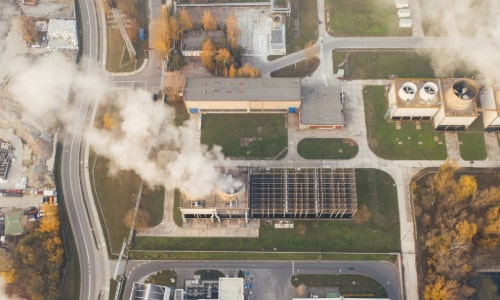
The European Union (EU) stepped up in 2021 and unveiled the Carbon Border Adjustment Mechanism (CBAM) where fees are charged on carbon footprint of certain imports. This aims to curb emissions, level the playing field, and unlock opportunities for innovation and a greener future.
The U.S. Securities and Exchange Commission (SEC) adopted on 6 March 2024 some significant and highly anticipated climate-related disclosure requirements for public companies in their periodic disclosure reports and in registration statements for public offerings (Final Rules).
The International Sustainability Standards Board (ISSB) has published amendments to the SASB Standards which aim to strengthen their international applicability. The amendments are intended to help reporting entities apply the SASB Standards regardless of the jurisdiction they are in or the generally accepted accounting principles (GAAP) they report under. However, they are not intended to significantly alter the structure or intent of the SASB Standards.
Sustainability reporting is not just about transparency and accountability; it's a catalyst for driving sustainable practices and policies. This article provides an introduction to what the GRI standards are and how to use them for your sustainability reporting.
Climate change is a pressing global issue that has far-reaching implications across various sectors. As the world grapples with the transition to a more sustainable future, businesses and investors need to consider the financial reporting implications of climate-related risks and opportunities. This article explores the impact of climate change on financial reporting and highlights the challenges and opportunities it presents.
There are no explicit requirements that address the accounting for mandatory emissions trading schemes, including mandatory carbon credits, or for voluntary carbon credits. This article explores the approaches that can be taken when accounting for emissions trading schemes.
Singapore's Ministry of Sustainability and the Environment, together with the National Environmental Agency, established definitive eligibility criteria within the framework of the International Carbon Credit. This framework offers a viable avenue for carbon-tax liable enterprises to fulfill a portion of their carbon tax obligations by surrendering eligible ICCs.
The European Sustainability Reporting Standards (ESRS) and the International Sustainability Standards Board (ISSB) are two organisations that are developing sustainability reporting standards. These are the similarities and differences between the standards developed by the European Commission and the International Financial Reporting Standards (IFRS) Foundation.
IFRS S1 and IFRS S2 mark the start of a new era of requiring companies to make sustainability-related disclosures.
Effective for periods beginning on or after 1 January 2024, the two new sustainability standards issued by the ISSB mark the start of a new era of requiring reporting entities to make sustainability related disclosures.
The International Sustainability Standards Board (ISSB) decided to add to the transitional reliefs already proposed in relation to the adoption of its first two Sustainability Standards – IFRS S1 ‘General Requirements for Disclosure of Sustainability-related Financial Information’ and IFRS S2 ‘Climate-related Disclosures’.
Green House Gas (GHG) emissions are classified into categories of Scope 1, Scope 2 or Scope 3. This is a way of grouping emissions between those created by the company and those created by its wider value chain.
The International Sustainability Standards Board (ISSB) confirms the effective date of its new Standards
When the global COVID-19 pandemic stormed across the globe in early 2020, the private equity sector was hit hard but deals are coming back to the market.