InvoiceNow and the future of indirect tax compliance

Navigating Singapore’s tax landscape
In this country-specific Q&A, we provide an overview of tax laws and regulations applicable in Singapore.

By: Jeremy O’Neill
25 Jun 2026 3 min read

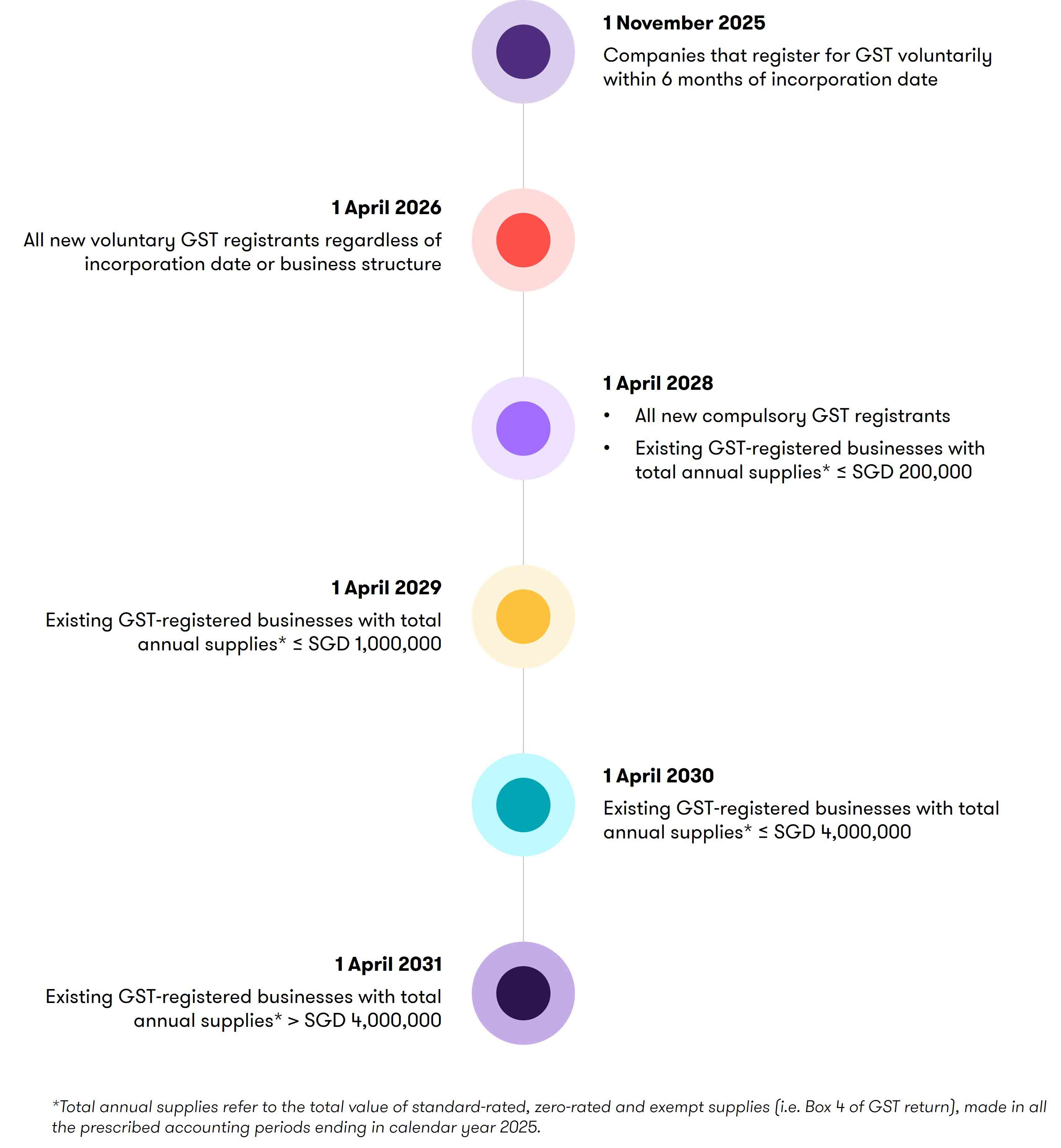
Goods & Services Tax (GST) registered businesses will be required to submit invoice data to the Inland Revenue Authority of Singapore (IRAS) via the InvoiceNow network, with mandatory participation introduced progressively across the following phases:
Below is a practical roadmap that businesses can use to structure planning from “now” through to their mandatory adoption date. The roadmap is designed to be scalable – SMEs can complete it quickly, while larger businesses can run it as a formal programme.
Companies that treat InvoiceNow as “another compliance deadline” often face avoidable disruption – rushed implementation, data issues at go‑live, and poor adoption across the business. Those that approach it as part of a broader transformation are more likely to gain:
Tax transformation is here to stay. Nothing remains stationary in the 21st century. As digitalisation accelerates, tax authorities and businesses alike must adapt to new expectations and new technologies.
InvoiceNow is a clear signal of where indirect tax compliance is heading – toward structured data, stronger controls, and increasing automation. Companies that take action now, align efforts with broader finance transformation plans, and build the right foundations (systems, data, processes and governance) will come out ahead in the long run.
We support businesses across the full InvoiceNow journey – from early readiness through implementation and post‑go‑live optimisation. We focus on practical, commercially‑focused advice that helps client meet regulatory expectations while strengthening their finance and tax operating models.
Typical support areas include:


In this country-specific Q&A, we provide an overview of tax laws and regulations applicable in Singapore.



In this article, we explore how digital asset exchanges, wallet providers and custodians can assess GST treatment across token activity, service income and customer location.


In this article, we explore how stablecoin and digital currency businesses can assess GST treatment, revenue streams and input tax recovery amid Singapore’s evolving regulatory framework.