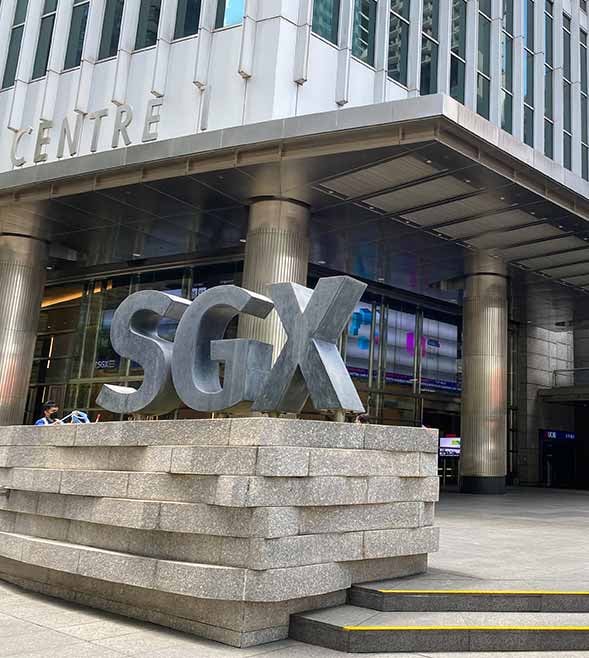
Recent enhancements to SGX listing requirements and market access thresholds, together with targeted incentives, signal a clear intent to broaden the pipeline of high-growth, high-quality organisations considering a Singapore listing.
However, a successful initial public offering (IPO) requires more than strong financial performance. The transition from a privately owned business to a listed company represents a fundamental shift in how an organisation is governed, managed and held accountable.
Beyond meeting listing requirements and preparing a prospectus, organisations must be ready to operate under heightened regulatory scrutiny, increased investor expectations and continuous disclosure obligations. This is anchored in the SGX Listing Rules and the Code of Corporate Governance.
For organisations exploring an IPO, this presents a timely opportunity. Listing is not merely a capital-raising event; it marks the beginning of operating in a more transparent and closely scrutinised environment, with significant emphasis on Board effectiveness, risk oversight, internal controls and the quality of corporate disclosures.
IPO readiness is therefore about more than going public, it is about building a more resilient and institutionalised organisation. Even where listing plans are delayed or deferred, the readiness journey helps strengthen core foundations and positions for future opportunities.
The critical question: What could prevent a successful listing?
At the heart of IPO readiness is a fundamental question for Boards and management:
Can the organisation operate effectively and credibly in a listed environment?
Boards and management should critically assess whether:
- Governance structures are sufficiently robust and independently challenged
- The Board has the right mix of experience and expertise to meet public market expectations
- Key controls operate effectively and can support timely and reliable reporting
- Organisational capabilities and roles are sufficiently defined to sustain a listed operating model
- Disclosure processes are disciplined, coordinated and able to support timely market communication
- Management is equipped to respond effectively to due diligence from sponsors/issue managers, external auditors, regulators and investors
For many growing organisations, the real challenge in IPO preparation lies in the scale of behavioural and cultural change required. Privately held organisations often operate with entrepreneurial agility, centralised decision-making and lean structures.
While these traits support growth, they may become obstacles in a listed environment if not supported by robust governance and control disciplines. This often results in over-reliance on founders or key executives, informal decision-making and limited documentation to withstand regulatory, auditor and investor scrutiny.
In a listed environment, public market stakeholders expect more than financial performance. Decisions must be properly governed, key material matters escalated promptly, records maintained reliably, and disclosures made in an accurate, timely and balanced manner. The Board’s role also becomes more demanding, extending beyond strategy-setting to overseeing and shaping governance, risk culture and setting the ethical tone for accountability.
The transition is therefore more than a procedural exercise. Organisations must move from reliance on key individuals to operating through structured, repeatable and well-documented processes.
Where IPO readiness gaps commonly surface – How organisations can respond and address them
IPO readiness gaps often emerge across governance, internal controls, organisational structure and disclosure practices. More importantly, how these gaps are addressed determines whether the listing journey is well-executed or becomes operationally challenging.
1. Governance and Board effectiveness
Many organisations often underestimate the increased expectations around Board composition, oversight and independence. Governance structures may remain informal, with limited independent representation, insufficient challenge, and gaps in experience relevant to a listed environment.
These gaps can reduce the effectiveness of oversight, affect investor confidence and attract regulatory scrutiny, particularly where governance appears overly dependent on a small group of individuals.
As organisations prepare for listing, Boards should evolve towards stronger independence, broader expertise and more diverse perspectives. Key priorities include:
- Appointing independent directors to enhance objective challenge and decision-making quality
- Aligning Board capabilities with strategic needs
- Establishing key Board committees, such as Audit, Nominating, and Remuneration Committees
A well-structured Board not only improves oversight but also enhances credibility with investors and regulators.
2. Internal controls over financial/operational processes
As organisations grow, processes that were once informal or founder-driven may no longer be sufficient to meet public market expectations. Common weaknesses include:
- Inconsistent financial closing processes
- Limited process documentation
- Inadequate segregation of duties
- Incomplete audit trails
While these issues may be manageable in a private organisation, these gaps can become significant under external scrutiny, and the consequences may include reporting errors and delays and regulatory compliance issues.
A mature internal control environment is therefore a cornerstone of IPO readiness.
Organisations should establish structured and scalable control environments rather than rely on adhoc and short-term fixes. This includes:
- Formalising corporate policies to support governance, risk management and compliance expectations
- Documenting key processes, controls and significant decisions, together with the underlying rationale, to enhance operational consistency, strengthen transparency, and demonstrate accountability to stakeholders and regulators
- Strengthening segregation of duties to mitigate risk and enhance oversight
- Enhancing financial reporting and close processes to improve timeliness and reliability
- Implementing monitoring mechanisms to assess control effectiveness and support continuous improvement
Many organisations adopt and leverage recognised frameworks (e.g. COSO) as a reference point, while tailoring them to their operating environment, size and complexity.
3. Organisational readiness
Transitioning to a listed organisation requires more than just stronger processes. It also requires the right people, skills and organisation structure. Common challenges faced by organisations include:
- Unclear roles and responsibilities
- Limited public-market experience within management
- Lack of dedicated investor relations and/or compliance functions
- Dependence on a small number of key individuals
- Weak management reporting, inconsistent performance metrics and fragmented data sources that hinder effective oversight and timely decision-making
These gaps can create execution bottlenecks, put additional pressure and stress on management and increase key person risk.
Strong IPO readiness is ultimately built on several key enablers:
- Defining roles and responsibilities are essential to establish accountability and support effective decision-making
- Strengthening core functions such as finance, compliance and company secretariat to support the Board’s responsibilities
- Developing investor relations capabilities for consistent and credible engagement with external stakeholders
- Reducing reliance on key individuals through institutionalised processes and knowledge
- Implementing structured succession planning provides continuity and confidence to shareholders
- Establishing robust management reporting, consistent performance metrics and reliable data sources to support effective oversight, informed decision-making and timely escalation of key issues
Together, these measures improve organisational resilience and support sustained performance after listing.
4. Disclosure readiness
Disclosure readiness is often overlooked during the early stages of IPO planning. As a listed company, organisations are required to communicate material information to investors, shareholders, regulators and the broader market in a timely, accurate and consistent manner.
Where coordination between finance, legal, operations and other key stakeholders is fragmented, the risk of delayed, incomplete or inconsistent disclosures increases, potentially impacting regulatory compliance, investor confidence and market credibility.
In a listed environment, the quality and timeliness of disclosures are crucial. Organisations should therefore establish disciplined processes including:
- Clearly defined materiality thresholds and escalation procedures
- Strengthening coordination and communication across finance, legal, and operations teams
- Implementing structured internal review and approval processes before disclosures are released
Such measures help strengthen compliance, improve transparency and maintain strong shareholder confidence.
Why early adoption of IPO readiness is important
A reactive approach, where IPO readiness activities commence only once listing plans are in motion, often results in common challenges, including:
- Delays to the IPO timeline arising from unresolved governance, risk management and control deficiencies
- Higher costs due to accelerated remediation efforts and greater reliance on external advisors
- Compressed implementation timelines, leading to execution risk
- Additional pressure on management and internal resources during an already demanding and complex IPO process
- Heightened risk of regulatory or audit issues that may affect listing readiness and investor confidence
A more effective approach is to begin readiness assessments 12 to 18 months ahead of a planned listing. This allows sufficient time to identify gaps, prioritise remediation activities, and provide management and the Board with greater visibility over progress. A practical IPO readiness review should focus on key areas such as:
- Financial reporting and closing processes
- Corporate governance and Board effectiveness
- Internal controls and risk management
- Budgeting, forecasting and performance monitoring
- Process ownership and accountability
- Regulatory compliance and disclosure readiness
- Decision-making, oversight and management reporting
IPO readiness extends beyond achieving growth or meeting listing requirements. It reflects an organisation’s ability to operate with the governance, transparency and accountability expected of a listed organisation.
Organisations that invest early in strengthening governance frameworks, risk management, internal controls, management oversight and disclosure processes are better positioned to navigate the IPO journey and sustain performance in the years that follow.
Ultimately, IPO preparation is not about replacing entrepreneurial agility. Rather, it is about complementing it with the structure, oversight and accountability needed to build stakeholder confidence and support long-term success as a public organisation.