Unlocking hidden costs of employee benefits
PayrollIn this article, we focus on the payroll and tax reporting requirements of benefits in Singapore.


In this article, we discuss the top five considerations when managing payroll in Singapore:
Managing payroll in Singapore involves more than just paying employees on time. With frequent legislative updates and a tightly regulated environment, businesses must stay informed and compliant to avoid costly penalties and operational disruptions.
Whether you are a small business owner or an HR professional, understanding the complexities of Singapore’s payroll system is essential. Here are the top five considerations when managing payroll in Singapore:
Singapore’s Employment Act outlines basic employment terms and working conditions, including regulations on salary payments, overtime, leave entitlements, and termination procedures. Payroll teams must ensure that all salary components adhere to these statutory requirements.
Key points to remember:
Whilst the above may not seem difficult to comply with, we have encountered several employers who still rely on Excel to process payroll. Unfortunately, this often results in undetected errors that only come to light when an issue arises.
The Central Provident Fund (CPF) is one of the critical components of Singapore payroll. Employers must correctly classify wages and make CPF contributions for all eligible employees. The contribution rates vary depending on an employee’s age, immigration status and monthly salary. We have seen a number of companies being caught out by the recent changes by either forgetting to increase the Ordinary Wage ceiling or by miscalculating the new Additional Wage ceiling.
It is also worth noting that the CPF rules differ from the tax rules and therefore you may have pay items that can be excluded from Singapore tax but would have to be included for CPF purposes. We come across clients that are aware that a particular benefit (e.g. red packets during Chinese New Year) are exempt from tax if they do not exceed SGD200 and therefore exclude it from payroll, even though it is still subject to CPF.
In addition to CPF, employers must also manage other statutory contributions, including:
Employers are responsible for submitting employee remuneration details, this includes benefits provided, to the Inland Revenue Authority of Singapore (IRAS). This is especially important under the Auto-Inclusion Scheme (AIS), which is mandatory for companies with five or more employees on payroll over the course of the year.
Key requirements include:
We come across clients who are unaware of the tax clearance requirements and this is especially important because failure to file on time can mean that the employer becomes liable for the employee’s outstanding tax liability.
Singapore frequently updates its labour laws, tax regulations, and contribution rates. These changes can significantly impact payroll calculations. Employers must proactively monitor these updates to maintain compliance.
Ways to stay informed:
Given the complexity of Singapore’s payroll environment, many companies choose to use cloud-based payroll software or outsource payroll to professional providers.
Benefits include:
Outsourcing payroll can also free up internal resources and provide access to expert advice on compliance and best practices.
Looking to simplify your payroll operations? By focusing on these five areas, you’ll be well-equipped to streamline your payroll processes and avoid costly mistakes. Managing your payroll in Singapore is about ensuring compliance, maintaining accuracy, and adapting to regulatory changes. The team at Grant Thornton is here to help. Reach out to us for a personalised consultation tailored to your business needs.



In this article, we focus on the payroll and tax reporting requirements of benefits in Singapore.


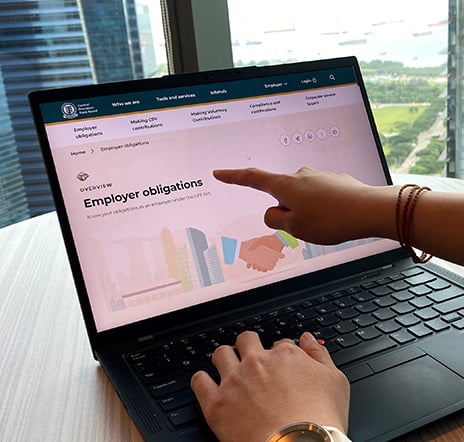
The Central Provident Fund (CPF) headline rules are changing from 1 September 2023, but the change would already have impacted some employees and there are organisations that might not be aware of this. In this article, we discuss how you can improve your payroll processes and avoid making costly mistakes.

Under this scheme, employers submit the employment income information of their employees to IRAS electronically.