The Singapore Budget 2026 was announced by Prime Minister and Minister for Finance Lawrence Wong on 12 February 2026. This hub will be where you can get key takeaways and potential impacts from our tax experts, empowering businesses and individuals to make informed decisions.
If you are planning on doing business in Singapore, this guide provides an overview of Singapore's investment environment. Learn more about common issues companies might face when expanding into Singapore and get insights on navigating the country's legal, accounting and tax landscape.
IFRS Alerts covering the latest International Financial Reporting Standards (IFRS), Interpretations of Standards (IFRIC) or amendments to existing IFRS Standards published by the International Accounting Standards Board (IASB).
Every business can benefit from the Internet of Things – just start small and choose wisely when deciding which operations you want to target.
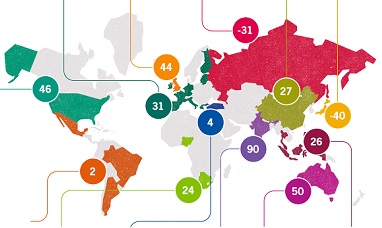
New research from Grant Thornton’s International Business Report (IBR) reveals that going into 2016, EU businesses remain surprisingly resilient in their outlook despite risks posed by the migrant crisis, terrorism and a possible referendum on the UK’s European Union membership.
The Grant Thornton International Ltd. IFRS team has published a comment letter in response to the IASB's Request for Views – 2015 Agenda Consultation.
This publication provides a high-level summary of recent changes to IFRS that will affect companies' future financial reporting.
India’s young, growing workforce and China’s ageing population put Asia’s two great economies at either end of the age dividend. In this article we explore how businesses will need to respond.
An article on the impact of BEPS on the Asia Pacific region.
The future of the insurance landscape is changing and the impact of strategy on mid-market companies is increasing.
Drawing on interviews from our IBR and other sources this report explores the opportunities and challenges for business growth in Asia-Pacific.
Tomorrow, we can expect new technologies enabling the internet of things to create opportunities for future fast-growth companies. Some will become industry leaders – the Xiaomis and Ubers of tomorrow. Many more will fail – either because their offering wasn’t differentiated enough, or because their management made the wrong decisions.
Scaling a tech business is like walking a burning tightrope. The faster you go, the more you risk falling off. But go too slowly and the rope will burn through.
On-going access to finance is a key issue for high-growth businesses. Those that lack financial firepower may find their growth constrained. Others may encounter problems with cash flow during day to day operations. At the same time the funding landscape has changed drastically since the financial crisis of 2008 – and continues to evolve.
For tech companies, the regulatory environment is tougher now than ever before. To protect national interests, governments are using compliance to restrict companies that could potentially disrupt established industries which can creating a knock on effect for tech companies. Rapidly expanding companies also face a wider range of individual regulations as they expand into new territories, be it employment law, taxation, product safety or licensing.
As global attitudes towards tax change, tech companies need to future-proof their tax practices to stand up to enhanced scrutiny. The way in which companies markets and sells its services can also have tax implications. Therefore, one thing is clear – tax matters, and ambitious tech companies need to develop a tax strategy that can keep pace with their growth aspirations.